
Introduction
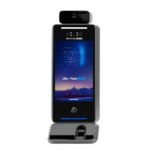
When choosing a face identification terminal for access control or attendance, it is essential to understand how the technology works. The UBio-X Face Pro and similar terminals rely on three distinct steps: face detection, face verification and face identification. Each plays a different role in confirming who is standing at the door.
UBio and ViRDI are product brands of UNIONCOMMUNITY Co., Ltd., a South Korean biometrics company headquartered in Seoul (UNIONCOMMUNITY). This guide explains the technical differences between face detection, face verification and face identification, and shows how each applies to the UBio range of terminals distributed in the UAE. Understanding these distinctions will help you select the right capacity and features for your access control requirements.
Face Detection, Verification and Identification
Face recognition is not a single process but a sequence of three steps (NIST glossary). The first step is face detection, which determines whether human faces are present in a digital image and locates them. Detection does not establish who the person is; it simply finds a face in the field of view. You can learn more about how face recognition works in our detailed guide.
Once a face is detected, the system performs either face verification or face identification. Face verification is a one-to-one (1:1) comparison in which the presented face is compared with the template associated with a claimed identity. Face identification is a one-to-many (1:N) search, comparing the presented face with all enrolled records to determine who the person is (NIST).
In summary, detection finds the face, verification checks whether it matches a single claimed identity, and identification searches the entire database to determine identity without prior claim. For guidance on deployment options, see our comparison of face recognition camera vs terminal.
Face Identification vs Face Verification at a Glance
| Step | Question it answers | Comparison | What the user presents |
|---|---|---|---|
| Face detection | Is there a face? | None | Face only |
| Face verification | Is this the claimed person? | 1:1 | Face plus card or PIN |
| Face identification | Who is this person? | 1:N | Face only |
Why 1:1 and 1:N Capacities Differ
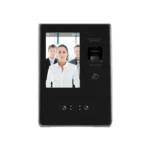
You will notice that terminals such as the UBio-X Pro list different capacities for 1:1 verification and 1:N identification. For example, the UBio-X Pro supports 200,000 face users for 1:1 verification but only 30,000 face users for 1:N identification (Union Biometrics UBio-X Pro).
This difference exists because 1:N identification searches all enrolled records every time a user presents their face. In contrast, when a card or PIN first identifies the claimed user, the system performs a 1:1 comparison of the presented face against only that single enrolled template, which reduces the search scope (NIST CSRC glossary).
UBio Face Terminals Compared
The UBio range offers several models with different face identification capacities and recognition distances. The UBio-X Face Premium is an 8-inch walk-through terminal that detects and authenticates faces at 0.5 to 4 metres while users pass through gates (UNIONCOMMUNITY UBio-X Face Premium). For a broader comparison of biometric options, see fingerprint vs face recognition or explore the full face recognition system range.
| Model | Face 1:N | Face range | Other credentials |
|---|---|---|---|
| UBio-X Face Pro | 30,000 | 0.5 to 2 m | Fingerprint, RFID, NFC, BLE, QR |
| UBio-X Face Premium | – | 0.5 to 4 m | Fingerprint, RFID, QR, mobile, PIN |
| UBio-X Pro | 30,000 | – | Fingerprint, card |
| UBio-X Pro 2 | 20,000 | Up to 3 m | Fingerprint, card |
Liveness Detection and Spoofing
A critical security concern with face identification is presentation attacks, in which an impostor presents a photograph, replayed video or mask instead of a live face. The international standard for assessing biometric presentation attack detection is ISO/IEC 30107-3, which covers testing and reporting of anti-spoofing performance (ISO). The standard covers attacks such as photographs or replayed images presented to the capture device, though it does not specify a particular anti-spoofing method.
Among the UBio terminals, the UBio-X Face Pro and UBio-X Pro 2 include liveness detection to guard against spoofing (UNIONCOMMUNITY UBio-X Face Pro; Union Biometrics UBio-X Pro 2). The UBio-X Pro 2 specifically guards against photos, videos and 3D masks.
Accuracy Terms: FAR and FRR
Two key metrics describe the accuracy of any biometric system. FAR (false acceptance rate) is the proportion of impostor transactions incorrectly accepted, while FRR (false rejection rate) is the proportion of genuine-user transactions incorrectly rejected (World Bank ID4D).
NIST’s former Face Recognition Vendor Test (FRVT) is now called Face Recognition Technology Evaluation (FRTE), with separate ongoing evaluation tracks for 1:1 face verification and 1:N face identification algorithms (NIST FRTE).
Face Data and UAE Privacy Law
In the UAE, face templates fall within the definition of biometric data under the Personal Data Protection Law. UAE Federal Decree-Law No. 45 of 2021 includes biometric data in its definition of sensitive personal data, and defines biometric data as data from physical, physiological or behavioural characteristics that enables or confirms unique identification, such as facial images or fingerprints (UAE Legislation).
Face Identification FAQ
What is the difference between face detection and face identification?
Face detection determines whether a human face is present in an image and locates it, but does not identify who the person is. Face identification is a 1:N search that compares the detected face against all enrolled templates to determine the person’s identity.
What is the difference between face verification and face identification?
Face verification is a 1:1 comparison in which the presented face is matched against a single claimed identity, for example after a card or PIN is presented. Face identification is a 1:N search that compares the presented face against all enrolled records without a prior claim, to determine who the person is.
Why does the UBio-X Pro list a lower face capacity for 1:N than for 1:1?
The UBio-X Pro supports 200,000 face users for 1:1 verification but only 30,000 face users for 1:N identification. A 1:N face identification search compares the presented face against all enrolled records in the database. When a card or PIN first identifies the claimed user, the system performs only a 1:1 match against that user’s template, which reduces the search scope.
Which UBio terminals include liveness detection?
The UBio-X Face Pro includes liveness detection (anti-spoofing). The UBio-X Pro 2 includes liveness detection to guard against spoofing with photographs, videos and 3D masks.
Is face data covered by UAE privacy law?
Yes. UAE Federal Decree-Law No. 45 of 2021 defines biometric data as data from physical, physiological or behavioural characteristics that enables or confirms unique identification, such as facial images or fingerprints, and classifies it as sensitive personal data.