
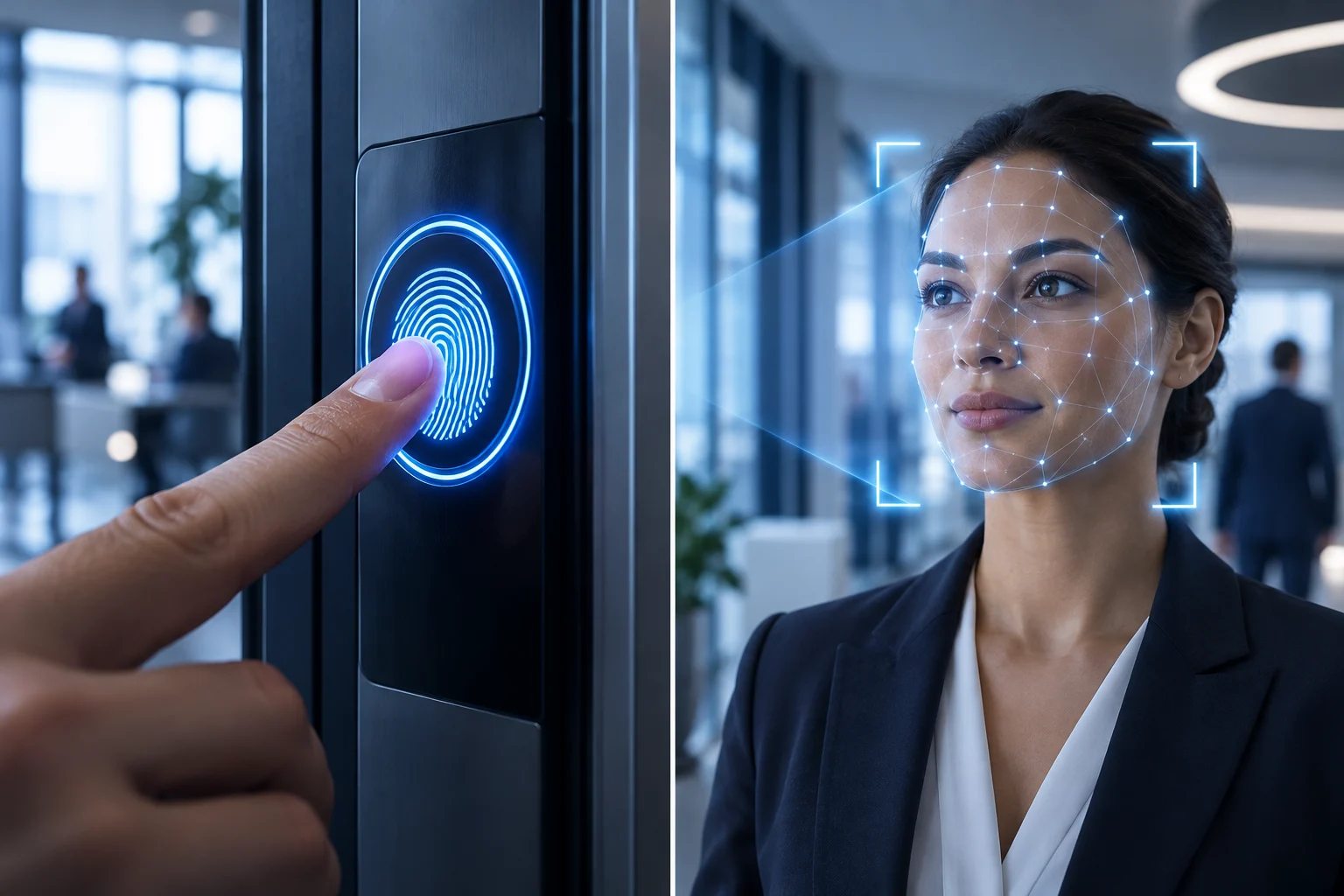
Fingerprint vs face recognition: the short answer
The fingerprint vs face recognition choice comes down to how people move through your doors. Fingerprint terminals are compact, proven and cost less per door, which suits offices, staff entrances and server rooms where users can stop and touch a sensor. Face recognition is contactless and faster at busy entrances, where people should walk up, or even walk through, without queuing.
Many UAE sites do not have to pick one. Several Union Biometrics terminals read face and fingerprint on the same device, so you can use face at the main lobby and add fingerprint as a second factor at restricted rooms. This guide compares the two technologies point by point and shows which UBio and ViRDi terminals fit each choice.
How each technology works
Fingerprint recognition
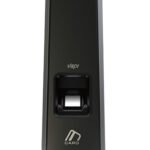
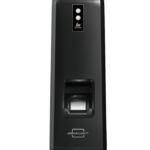
A fingerprint terminal captures the ridge pattern of a finger on an optical sensor, turns it into a template and matches it against enrolled users. Union Biometrics sensors scan at 500 dpi, and its Live Finger Detection checks that a real finger is on the sensor, rejecting fakes made from gelatin, rubber, silicone or paper.
Face recognition
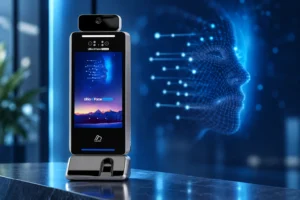
A face terminal uses a camera and a face algorithm to match the geometry of a user’s face against stored templates, usually in under one second. Liveness detection blocks attempts with printed photos, videos or 3D masks. Because nothing is touched, the user only needs to look toward the terminal from the recognition distance the model supports.
Side-by-side comparison
The table compares the two methods on the points buyers ask about most. Values in brackets come from Union Biometrics specifications for the models named.
| Factor | Fingerprint | Face recognition |
|---|---|---|
| Contact | Finger touches the sensor | Contactless |
| Recognition distance | On the sensor | 0.5 to 2 m (UBio-X Face Pro), up to 3 m (UBio-X Pro 2), up to 4 m walk-through (UBio-X Face Premium) |
| Matching speed | Under 1 second | Under 1 second |
| Anti-spoofing | Live Finger Detection against gelatin, rubber, silicone and paper fakes | Liveness detection against photos, videos and 3D masks |
| Bright light | Not affected | Rated for strong light |
| Gloves, wet or worn fingers | Can cause failed reads | Not affected |
| Covered faces | Not affected | Needs the face visible |
| Outdoor doors | IP65 models available (ViRDi AC-2200 IP65) | IP55, IP65 optional (UBio-X Face Pro) |
| Typical cost per door | Lower | Higher |
| Best fit | Staff doors, offices, server rooms, budget roll-outs | Busy lobbies, gates, hygiene-sensitive sites |
When fingerprint is the better choice
Fingerprint remains the most widely deployed biometric at UAE doors because it is simple and affordable. It is usually the right pick when:
- Budget per door matters and users can stop for a second at the reader.
- Staff wear face coverings, helmets or masks that would block a face camera.
- The door is outdoors and exposed, where an IP65 fingerprint reader such as the ViRDi AC-2200 IP65 is a proven option.
- You want a slim reader that suits an office interior, such as the UBio-X Slim at 23.5 mm deep.
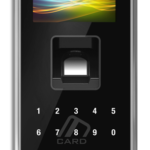
- You need Bluetooth mobile cards alongside fingerprint, as on the ViRDi AC-5100.
Fingerprint is a weaker fit for construction sites, kitchens or clinics where gloves, dirt or frequent hand washing make fingers hard to read.
When face recognition is the better choice
Face recognition earns its higher price at entrances where speed and hygiene matter more than cost. It is usually the right pick when:
- Hundreds of people arrive at once and queues at the door are a problem.
- You want a touch-free entry for hospitals, clinics, food plants or shared offices.
- Users wear gloves or work with their hands, so fingers are often dirty or worn.
- The entrance gets strong daylight, where a terminal rated for high lux keeps working.
- You want walk-through entry at a lobby or turnstile line, as on the UBio-X Face Premium with recognition up to 4 m.
Face recognition is a weaker fit where faces are routinely covered. For those doors, fingerprint or the UBio-X Iris , which Union Biometrics rates for users wearing glasses, masks, a niqab or a hijab, is the safer choice.
Why many sites use both on one terminal
Choosing face or fingerprint is often a false choice, because several UBio-X terminals support both. That lets you match the level of security to each door without buying two systems.
- Main entrance: face only, for fast contactless entry.
- Server room or cash office: face plus fingerprint as two-factor authentication.
- Fallback: fingerprint or card for anyone whose face cannot be read that day.
The UBio-X Face Pro stores up to 30,000 faces (50,000 as an option) and 50,000 fingerprint users, and also reads cards, QR codes and NFC or BLE mobile credentials. The UBio-X Pro 2 combines face, fingerprint and card, with face matching across 20,000 templates in under one second. Its fingerprint templates follow the ISO 19794-2 and ANSI-378 formats, and the Face Pro’s extractor and matcher are NIST MINEX certified and compliant.
Which UBio and ViRDi terminals fit each choice
The models below are all from Union Biometrics and are supplied in the UAE by eTOP.
| Model | Authentication | Key spec | Best for |
|---|---|---|---|
| UBio-X Slim | Fingerprint, card, mobile | 100,000 fingerprint users, 23.5 mm deep | Indoor office doors |
| ViRDi AC-2200 IP65 | Fingerprint, card | IP65, 10,000 users | Outdoor fingerprint doors |
| ViRDi AC-5100 | Fingerprint, card, Bluetooth mobile card | 20,000 card users, 2.8-inch colour LCD | Fingerprint with mobile access |
| UBio-X Face Pro | Face, fingerprint, card, QR, mobile | 0.5 to 2 m, IP55 (IP65 optional) | Mixed face and fingerprint sites |
| UBio-X Pro 2 | Face, fingerprint, card | Up to 3 m, 25,000 lux | Bright lobbies and factory gates |
| UBio-X Face Premium | Face, fingerprint, QR, mobile, card, PIN | Walk-through up to 4 m, 8-inch screen | High-traffic entrances |
| UBio-X Iris | Iris, fingerprint, card | Up to 50 cm | Covered faces and high-security rooms |
For the full ranges, see the fingerprint recognition systems and face recognition systems pages.
Fingerprint vs face recognition FAQs
Is face recognition more secure than fingerprint?
Both are secure when the terminal has anti-spoofing. Fingerprint terminals with Live Finger Detection reject fake fingers, and face terminals with liveness detection reject photos, videos and masks. For the highest-risk rooms, combining the two on one terminal is stronger than either alone.
Does face recognition work in bright UAE sunlight?
It depends on the model’s light rating. The UBio-X Pro 2 is rated for up to 25,000 lux and the UBio-X Pro Lite for up to 30,000 lux, so they suit sunlit lobbies and gates.
Can a fingerprint reader be fooled by a fake finger?
Readers without liveness checks can be. Union Biometrics’ Live Finger Detection is designed to tell a real finger from fakes made of gelatin, rubber, silicone or paper.
Can I add face recognition to an existing fingerprint system?
Often yes. The UBio-X Face Pro has Wiegand in and out, RS-485 and Ethernet, so it can connect to many existing access control panels. Check your panel’s inputs and software before you order.
What if staff wear a niqab, mask or safety gear?
Face recognition needs the face visible. Fingerprint works regardless of face coverings, and the UBio-X Iris authenticates users wearing glasses, masks, a niqab or a hijab.